
Topic guide
Outdoor surfaces
Cleaning guidance organised by material, condition and risk—because concrete, timber, render and paint do not tolerate the same treatment.
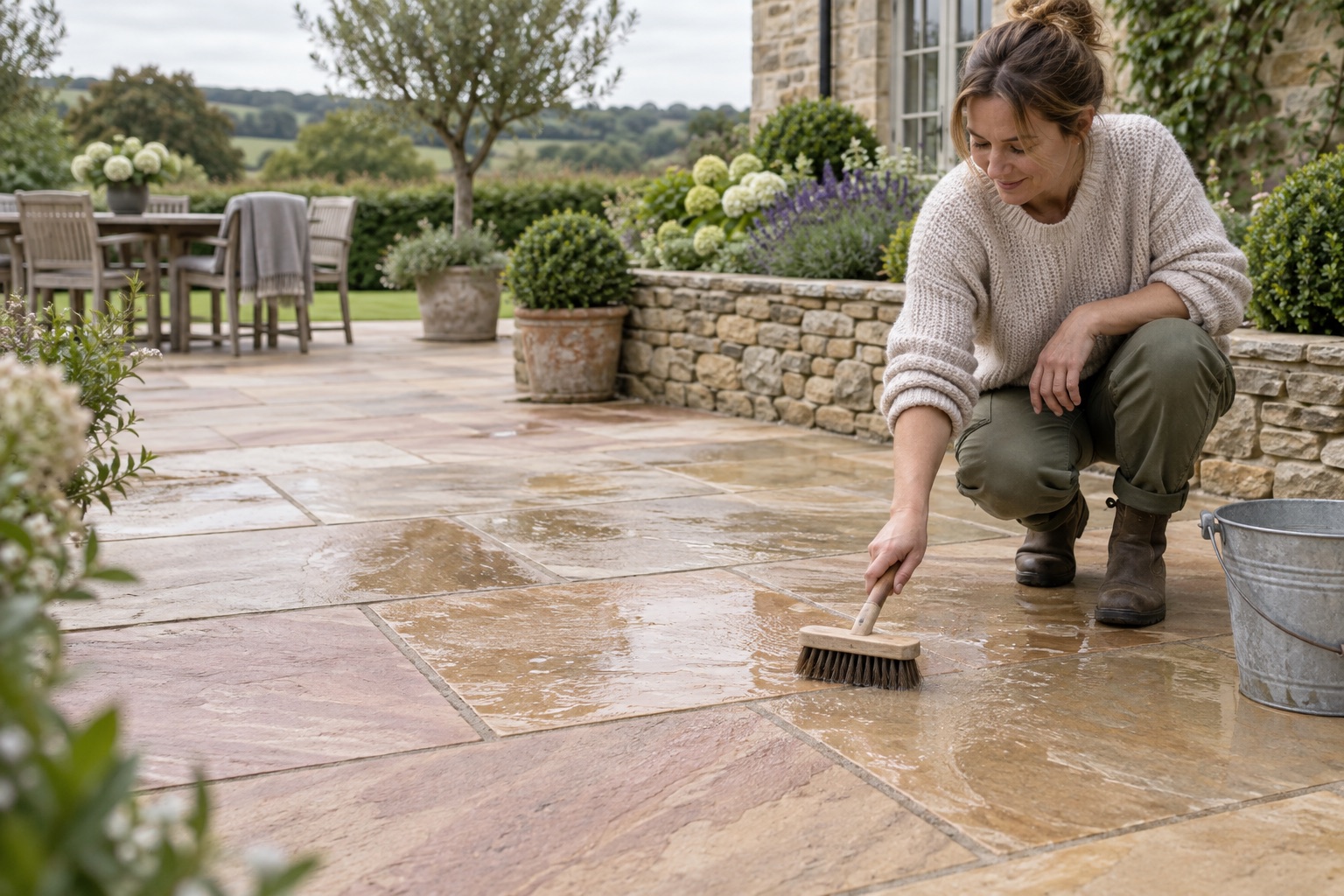
Patios, paving and driveways
First identify the paving and the joints. Dense concrete, porcelain, sandstone, limestone, block paving, resin-bound surfacing and tarmac have different weak points. A surface-cleaner head can make flat work more even, but it does not make every pressure setting safe.
Brush away loose grit, protect doors and vents, test a discreet area and decide where the dirty water will go. On block paving, expect loose jointing sand to move and plan for the correct replacement after the surface is fully dry.
Marshalls' paving maintenance guidance illustrates why paving type and jointing material should determine the method rather than one pressure setting for every patio.
Start with the safe patio pressure-washing method, choose the correct sandstone, porcelain, concrete or limestone guidance, and use the patio pressure-washer guide only when a machine is appropriate.
Decking, fences and outdoor wood
Water pressure can raise the grain, cut soft fibres and force moisture into gaps. Composite boards can also mark, and each manufacturer may specify a different limit. Use the widest suitable fan, work with the grain, keep moving and follow the board maker's maintenance instructions.
Rotary jets are for robust mineral surfaces, not a shortcut for timber. If boards are rotten, split, loose or already heavily weathered, cleaning is not the first repair.
The Timber Decking & Cladding Association's advice favours regular sweeping and warns that excessive pressure can bruise timber.
Begin with the pressure-washing decision, then choose the timber, composite or manual cleaning method. Our decking pressure-washer guide compares controllable machines and lower-pressure alternatives.
Brick, render and exterior walls
“Render” is not one material. Maintenance guidance varies between monocouche, silicone, lime, painted masonry, dry dash and proprietary systems. Unknown, cracked or loose surfaces need identification before cleaning. High pressure can erode the face, loosen coatings or drive water behind a defect.
Brickwork brings its own limit: a sound brick face may tolerate controlled washing while soft or failing mortar does not. Suspected asbestos cement and old unstable coatings are stop-and-check situations, not pressure-washer jobs.
For sensitive finishes, see natural-stone garden walls and uPVC roofline boards. Exterior glazing needs a different, low-force method.
Furniture, bins and garden equipment
Plastic, powder-coated metal, hardwood, softwood and woven furniture need different treatment. Begin with the maker's care label and use a brush or hose where pressure would force water into joints or damage a finish. For bins and greasy equipment, contain residue and keep contaminated water away from surface drains.
Start with the furniture method selector, then follow the wood, plastic or metal guide. We also cover garden tools, wheelie bins, greenhouses, wooden fences and shed exteriors.
Special-use areas deserve their own method: artificial grass, gravel paths and outdoor play equipment.
When lower pressure is the better tool
A stiff brush, ordinary hose rinse or an authorised surface treatment can be slower but more controlled. This is often the better route for fragile joints, older coatings, unknown render and small areas where overspray would create more work than it saves.
Use cleaning products exactly as labelled. Do not mix chemicals, do not improvise strong recipes, and keep people, pets, plants and drains protected as the label directs.