
Wooden furniture guide
How to clean wooden garden furniture
Clean outdoor wooden tables and chairs without roughening the grain. Learn when to wash, dry, oil or leave a weathered finish alone.
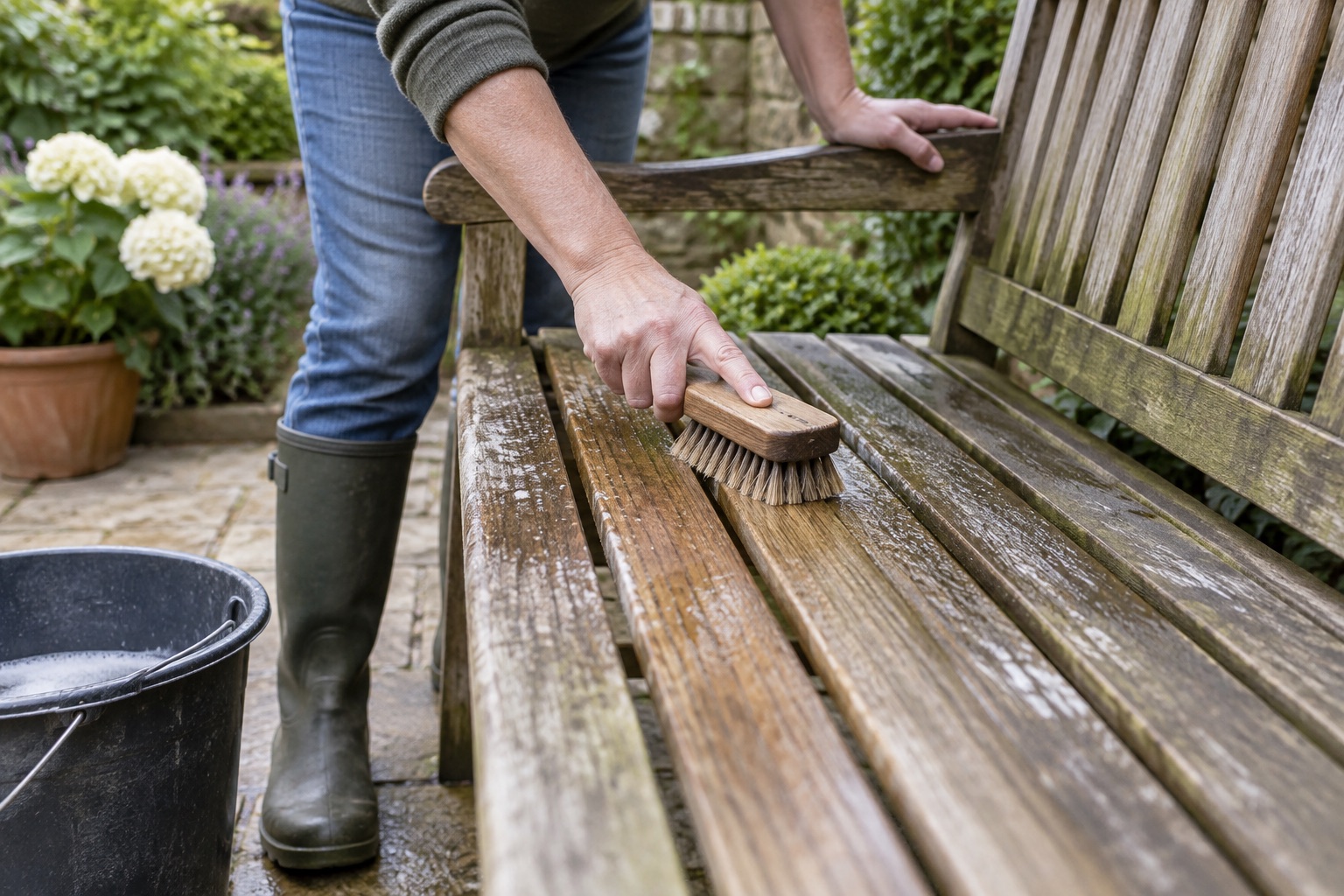
Identify timber and the coating first
Outdoor furniture may be teak or another hardwood, pressure-treated softwood, painted pine or a wood-look composite. Those are not interchangeable. Look for a maker's label, an existing oily feel, a film-forming varnish, flaking paint or bare silvered timber. If the piece is structurally soft, loose or split, repair takes priority over cosmetic cleaning.
Grey hardwood is not automatically damaged: weathering can be a natural surface change. A cleaner can remove grime, but it may also expose colour variation. Test underneath a seat or tabletop edge and let it dry before doing the visible face. For a mixed set, refer back to the all-material furniture guide.
How to wash a wooden table or chair
- Choose a mild, dry day and move cushions, metal accessories and pots clear.
- Brush leaves and loose grit off dry boards, joints and the underside. Check fixings and splinters.
- Test a wood-furniture cleaner on a hidden patch, following its dilution and dwell directions.
- Work along the grain with a soft non-metal brush or cloth. Do not scrub across soft fibres.
- Rinse or wipe as the label directs, avoiding standing water in end grain and joints.
- Allow the whole piece to dry evenly before judging colour or applying any treatment.
Ronseal's furniture-cleaning guidance cautions against using pressure to clean wooden furniture. Close jets can raise grain, carve softwood and force water into joints. If a maker explicitly permits powered rinsing, a very broad gentle fan from a distance is still a last resort, never the cleaning tool for a loose or weathered piece.
Decide whether to oil, paint or leave it weathered
After cleaning, a sound hardwood set can stay naturally silvered if its maker allows it. To restore a richer appearance or improve water resistance, use a hardwood furniture oil only where appropriate. Ronseal's hardwood furniture oil instructions require the right preparation; a previously painted or varnished surface cannot simply be oiled over. Follow the product's drying conditions and test colour on an inconspicuous area.
Painted softwood usually needs spot repair and a compatible exterior paint, not hardwood oil. Never seal trapped moisture beneath a new finish. Keep furniture off wet ground, clear debris from horizontal joints and store it dry with airflow. Wooden decking has different exposure and coatings; use the timber decking guide for boards underfoot.
Wood cleaner first, hardwood oil only if suitable
Cuprinol cleaner belongs in the washing stage. Ronseal hardwood furniture oil is optional aftercare for a compatible, fully dry piece. Check current labels and the furniture manufacturer's instructions before using either.
 View product on Amazon
Cuprinol Garden Furniture Cleaner 500ml
Best for: Cleaning suitable wooden garden furniture before maintenance
A wood-furniture cleaner for weathered outdoor tables and chairs. Patch test, use sparingly and follow the container instructions before considering an oil or finish.
For the maker-approved wooden surface; do not treat it as a universal cleaner for plastic, metal or fabric.
- 500 ml
- Wood furniture
- Patch test
- Follow label
 View product on Amazon
Ronseal Ultimate Protection Hardwood Furniture Oil 1L
Best for: Re-oiling clean, dry, suitable hardwood garden furniture
An aftercare oil for approved hardwood furniture after cleaning and full drying. Check previous coatings, preparation and drying instructions before applying.
Not a detergent and not a default finish for softwood, painted, varnished or composite furniture.
- 1 l
- Hardwood furniture
- After cleaning
- Check old finish
Frequently asked questions
Can I pressure wash a wooden garden table?
Avoid it unless the maker explicitly allows it. Hand cleaning protects the grain and joints far better.
Does grey hardwood need cleaning or oil?
Grey colour alone may be normal weathering. Clean actual dirt; oil only if you want a compatible finished appearance and the wood is prepared.
How long should wood dry before oiling?
Until fully dry throughout the surface and joints, under the oil maker's stated conditions. Do not rely on a fixed number of hours after a wet wash.
Can hardwood oil go over paint?
No. A film coating must be dealt with according to the chosen finish system; do not apply oil over intact paint or varnish.
What is the safest brush for wooden furniture?
A soft non-metal brush used with the grain after a hidden-area test. Stiff wire brushes can gouge the surface.