
Patio method comparison
Patio cleaner vs pressure washing
Compare chemical patio cleaner, manual brushing and pressure washing by stain type, paving material, joint condition and runoff risk.
Wet & Forget's outdoor concentrate is described as a diluted spray-on treatment that works over time without immediate scrubbing or rinsing. That workflow differs from using a washer to lift loose material now. Read the manufacturer's application description.
The useful distinction: chemistry versus force
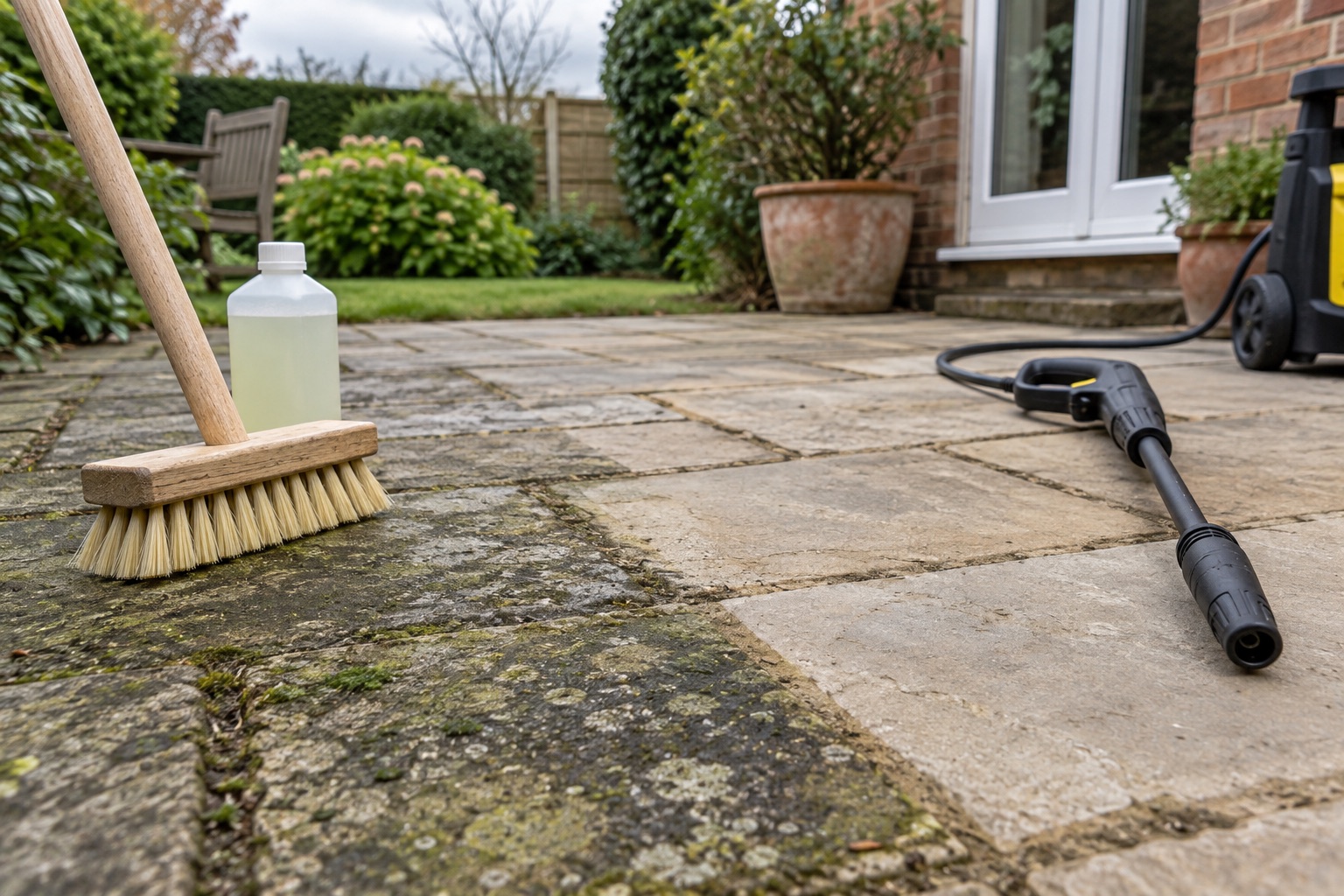
A cleaner is chosen by the contamination it addresses and the paving it is allowed on. A brush supplies controlled agitation. A washer removes deposits with water flow and impact; turning up the pressure does not make a rust or oil stain chemically disappear. It may instead strip jointing sand or expose a different surface colour. In many gardens the best first pass is sweeping and a small water-and-brush test.
Cleaner alone can still be the wrong move. Some products must be rinsed before drying; others are leave-on treatments intended for slow action and should not be pressure-washed immediately. Follow the specific label, not a generic “patio cleaner” schedule. On a large sound concrete slab, a broad fan or compatible enclosed surface head can speed soil removal; on loose pointing, soft stone or a damaged slab, force is the bigger risk.
Choose by the visible mark
For ordinary dullness on a compatible concrete or gravel tile, HG Patio-Tile Cleaner is a brush-and-rinse example. For algae or lichen, Wet & Forget Outdoor is a separate diluted, leave-on growth treatment, subject to its current surface and weather instructions and with particular care around aquatic life. For black spots, read our black-spot guide; a stain-specific product may be needed. Oil and rust require still different methods: see concrete oil stains and rust on paving.
 View product on Amazon
HG Patio-Tile Cleaner 1L
Best for: Gravel and concrete patio tiles and other paving approved by the label
A concentrated brush-on cleaner for ordinary grime on the patio materials named by HG. It is not a black-spot, rust or oil-stain treatment.
Pre-wet, dilute, scrub and rinse according to the current bottle; do not assume suitability for limestone or an unidentified sealed finish.
- 1 litre
- Concentrate
- Gravel and concrete tiles
- Brush and rinse
 View product on Amazon
Wet & Forget Outdoor Cleaner 5L
Best for: Label-approved outdoor surfaces with algae, mould or lichen
A concentrated outdoor treatment for organic growth on many exterior surfaces. It is a treatment, not an instant pressure-washing substitute; follow the label for dilution, weather and runoff.
Check the exact surface and any sealer with the maker before use; keep it out of ponds and follow plant and pet precautions.
- 5 l concentrate
- Outdoor surfaces
- Organic growth
- Label-led dilution
 View product on Amazon
Kärcher Stone & Facade Cleaner 1L
Best for: Label-approved mineral paving through a compatible Kärcher washer
A stone-and-facade detergent for compatible Kärcher pressure washers. Its broad category name does not override a paving maker's restrictions on cleaners or pressure.
Verify the exact bottle, stone type and machine detergent connection before use; do not treat fragile limestone or pointing by default.
- 1 litre
- Stone and facade
- Kärcher system
- Check substrate
When a pressure washer earns its place
If the patio is structurally sound, its maker allows pressure cleaning, and you can contain the dirty water, a washer can remove loose grit and surface grime efficiently. Begin with a broad fan, low effective output and generous distance; test a hidden area and keep the jet moving. Do not direct it into mortar joints or beneath paving. See the step-by-step patio method.
If the cleaner label calls for a separate application, apply it with the specified brush or sprayer rather than assuming the washer detergent tank is suitable. Never combine chemicals to save a pass. Plan for rinse water before any liquid treatment, especially near drains and planted beds. The runoff guide covers that decision.
Frequently asked questions
Is patio cleaner better than a pressure washer?
Only for a mark its label addresses on a permitted surface. A washer is better suited to removable loose soil on robust paving.
Can I use both on the same day?
Only if the exact product directions allow that sequence; leave-on growth treatments may not.
Will pressure washing remove black spots?
It may lighten surface dirt, but embedded black-spot growth can persist. Avoid escalating pressure until you identify the mark.
Which is safer for pointing?
Gentle hand methods usually give more control. Both a jet and an unsuitable cleaner can damage weak joints.
Does a cleaner eliminate runoff concerns?
No. Rinse-off chemicals and loosened dirt still need a controlled route, and even leave-on treatments must be kept out of drains and water.