
Engine-bay risk guide
Can you pressure wash a car engine bay?
A pressure washer is usually a poor default for engine-bay cleaning. Understand water-ingress risks, consult the car manual and clean accessible surfaces by hand.
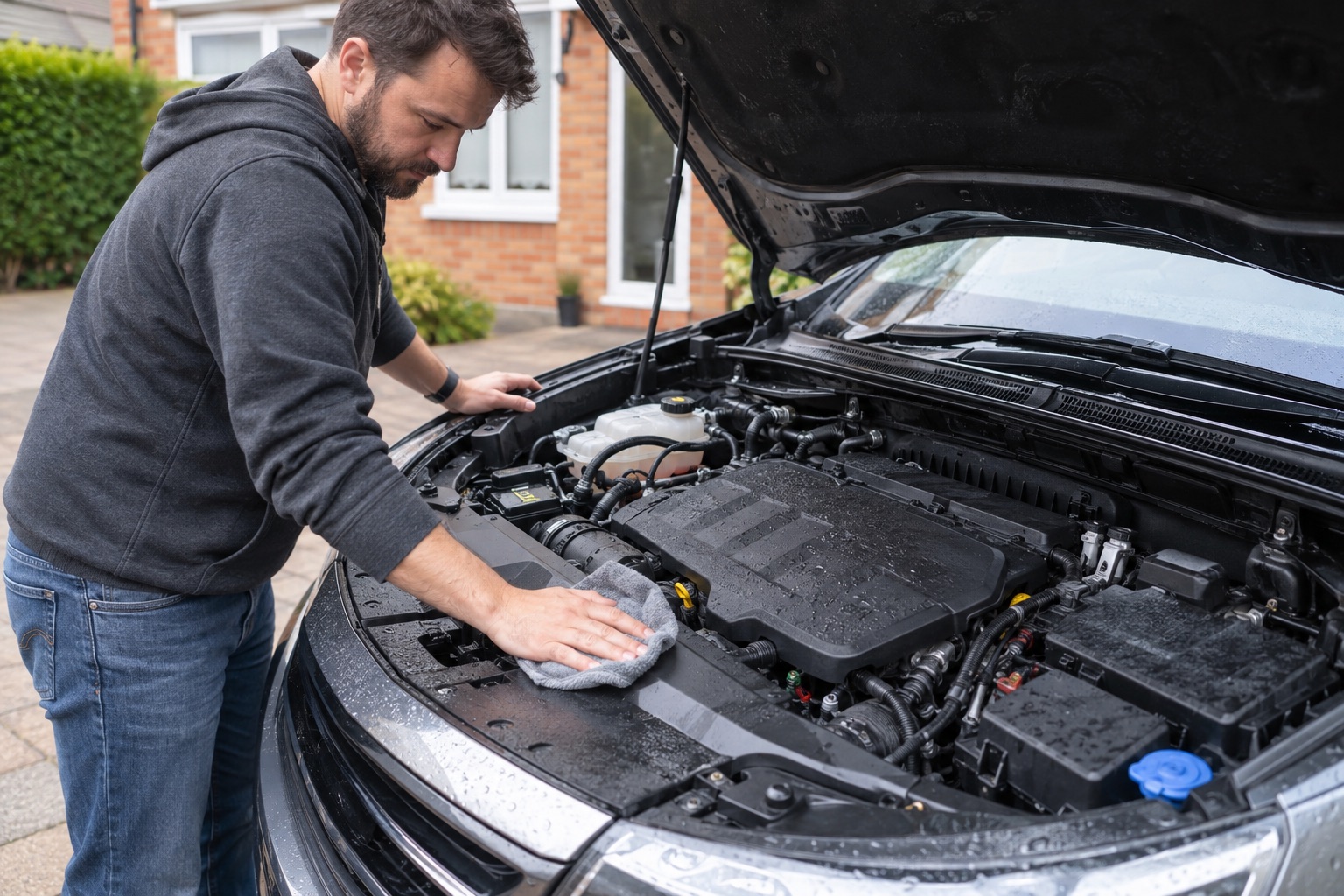
Why a car’s engine bay is different
Modern engine compartments contain electrical connectors, control modules, fuse and relay boxes, intake paths, belts, bearings and delicate cooling fins. A pressure jet can force liquid past seals, dislodge protective covers or bend radiator and condenser fins. A hot engine adds thermal and burn risks. An oily bay also creates contaminated runoff that should not enter surface-water drains.
Ford’s owner guidance says not to wash an engine compartment if unfamiliar with its components, and warns against rinsing a hot or running engine or wetting ignition parts. Advice varies by vehicle, so the exact handbook is the starting point. Hybrid and electric vehicles add high-voltage components that should never be treated as ordinary washable hardware.
For light dirt, use a dry or barely damp method
- Park safely, switch off and let the engine cool fully. Do not touch or disconnect high-voltage components.
- Read the vehicle manual’s engine-compartment care instructions. If it forbids wet cleaning, stop there.
- Vacuum loose leaves from accessible scuttle areas without pushing them into vents.
- Wipe reachable plastic covers and painted edges with a clean barely damp cloth; keep liquid off electrical and intake openings.
- Use a separate dry cloth to remove residue and check that no cloth, tool or cover has been left in the bay.
Do not use the exterior car shampoo as an engine degreaser. If oil continues to appear, diagnose the leak before cleaning; a shiny cover is not a repair.
Hand-cleaning supplies, with a conditional degreaser
Clean microfibre cloths are the first-line product for accessible dust and plastic trim. Autoglym Engine & Machine Cleaner is intended for engine grime, but use it only if the specific vehicle manual permits wet cleaning and the product label approves the material. Its own guidance warns against flooding electrical parts and using a pressure wash. For a heavy, oily or unfamiliar engine bay, a specialist is the safer route.
 View product on Amazon
Amazon Basics Microfibre Cleaning Cloths, 24-pack
Best for: Separate soft cloths for low-water cleaning and drying of accessible surfaces
A multipack of reusable microfibre cloths for controlled hand cleaning. Keep clean cloths separate by task, and never drag grit across paint or electrical contacts.
Useful for careful wiping, not a substitute for a paint-safe wash mitt on gritty car bodywork.
- 24 cloths
- 40.5 × 30.5 cm
- Reusable
- Keep grit separate
 View product on Amazon
Autoglym Engine & Machine Cleaner 1L
Best for: Accessible engine-bay grime where the vehicle maker permits wet cleaning
A water-based cleaner intended for engine and machine grime. Use only after checking the vehicle manual, protect sensitive components and follow the label; never spray into electrical connectors, intakes or a hot engine.
Not a licence to pressure wash an engine bay. A damp cloth alone is preferable for light dust.
- 1 l
- Water-based
- Engine and machine grime
- Manual-led use
Stop when a fault, not dirt, is the issue
Seek mechanical advice for active fluid leaks, damaged wiring, corrosion at connectors, warning lights or a vehicle that misfires after exposure to water. Do not start the engine to “dry it out” if you suspect water has entered an electrical assembly. For the outside of the car, follow our bodywork wash method and distance guidance; neither should be transferred under the bonnet.
Frequently asked questions
Can I jet wash under the bonnet?
It is not a routine DIY recommendation. Check the exact vehicle handbook; high-pressure water can enter sensitive assemblies.
Can I wash a hot engine?
No. Let it cool fully and never wash a running engine. Hot parts can burn you and rapid cooling may damage components.
Is covering the battery enough?
No. Fuse boxes, intakes, ignition and control components may also be vulnerable. Follow the vehicle’s full instructions.
What should I use for engine-bay dust?
Start with a vacuum and a barely damp clean cloth on accessible, cool surfaces, keeping moisture away from openings.
Where should oily wash water go?
Do not send contaminated runoff to a surface-water drain. Heavy oily cleaning is best handled by a service with proper containment and disposal.