
Render safety guide
Can you pressure wash render?
Pressure washing render can remove finish and drive water into cracks. Learn when to stop, what to check and how to clean algae more gently.
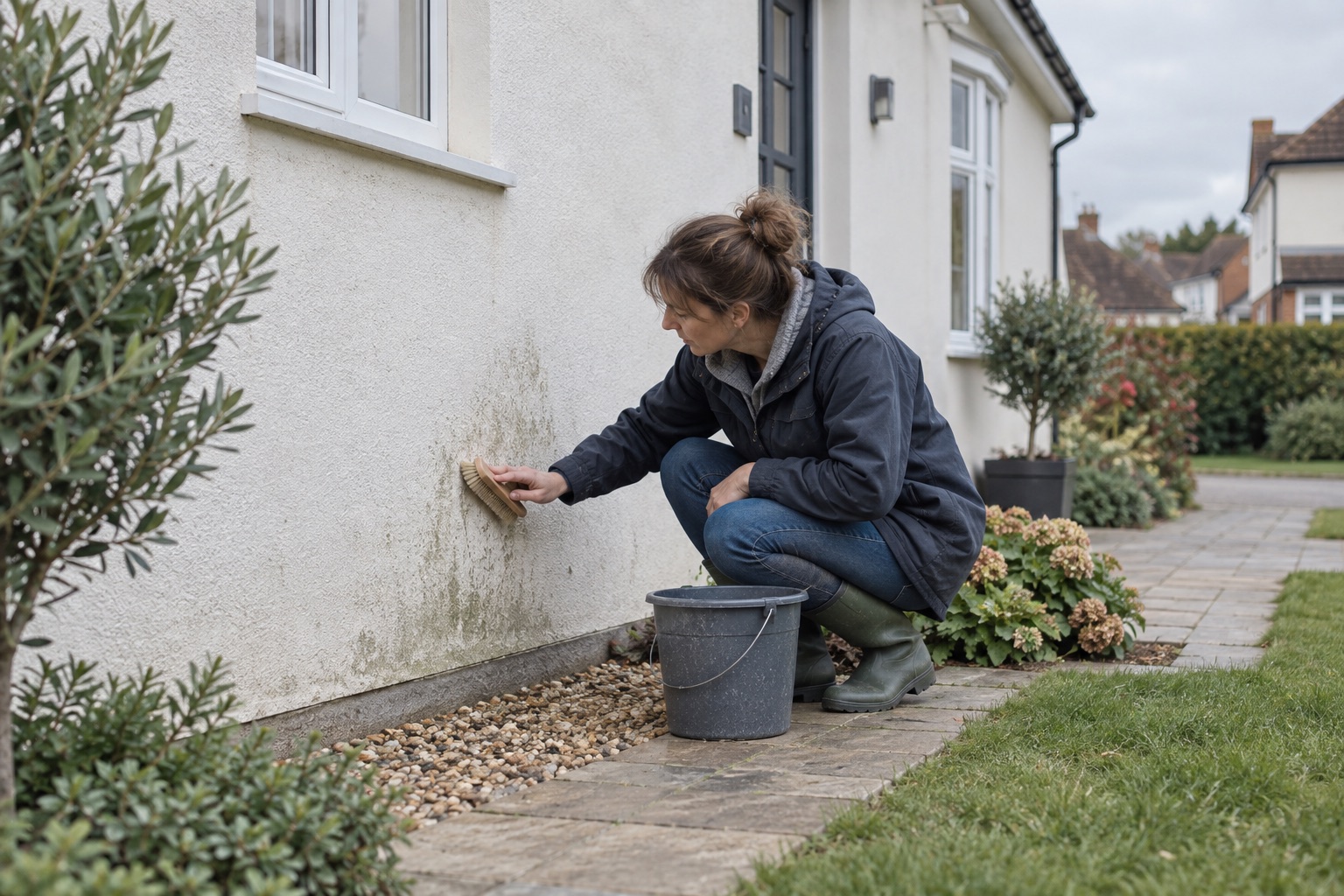
Why a powerful jet can damage render
“Render” covers more than one material: traditional sand-and-cement, lime, monocouche, silicone and thin-coat systems behave differently. A jet that appears harmless on concrete paving can cut into a textured wall finish or lift its paint. Water can be forced through hairline cracks, around window junctions and behind loose material. If the wall already sounds hollow, pressure is a repair problem, not a cleaning solution.
Never assume the pressure washer’s lowest setting is automatically safe. Nozzle pattern, distance, dwell time and the condition of the wall all affect impact. A rotary or pencil jet concentrates force and is a particularly poor choice. The safe starting point is the render system’s maintenance guide, not a generic bar figure.
Identify the render and its coating first
Check installation paperwork, the product or installer name and any paint maintenance history. Look for fine cracks, chalking, flaking, spalling, loose edges around sills and dark stains that remain after rain. Photograph defects before cleaning so you can separate dirt from deterioration. On a coloured-through or coated system, abrasive scrubbing can leave a permanent pale patch even if the wall remains watertight.
If the surface is under warranty, follow the system maker’s written method. For older or unknown render, treat the finish as delicate. Historic lime render and weak masonry warrant specialist advice rather than a machine trial.
For one manufacturer-specific example, K Rend’s maintenance guidance describes controlled fan application and warns that high pressure can damage its render. That is not permission to wash an unidentified finish: confirm the exact installed system and its condition with the maker or installer first.
A low-force route for routine dirt and algae
- Fix the cause of damp staining. Clear overflowing gutters, leaking downpipes and vegetation holding moisture against the wall.
- Protect the surroundings. Cover or move vulnerable plants as the cleaner label directs and prevent runoff entering drains or ponds.
- Patch test at ground level. Try a soft brush with controlled water flow on a hidden sound area. Stop if colour or grains lift.
- Treat growth only if approved. Choose a product labelled for the exact rendered finish, obey dilution and weather directions, and do not mix chemicals.
- Rinse or leave in place exactly as labelled. Some outdoor treatments are designed to weather away slowly; others require a controlled rinse.
For a broader manual method, see cleaning exterior walls without pressure. If the wall is actually painted masonry, use our paint-specific guide.
Products that suit a cautious first pass
The GARDENA soft brush has a short water-fed handle and adjustable flow for reachable areas; avoid the included cleaning tabs unless your render maker approves them. Wet & Forget is an outdoor algae treatment, not a repair for cracked render. Check its current label for your exact surface, nearby planting and runoff before use. Neither product makes unsafe access or unsound render suitable for DIY cleaning.
 View product on Amazon
GARDENA Cleansystem Soft Wash Set
Best for: Ground-level cleaning of sound, delicate exterior finishes after a patch test
A 90 cm water-fed handle and soft brush for controlled cleaning of larger sensitive surfaces. Use light contact and check the wall finish maker's guidance; the included cleaning tabs are not automatically suitable for render or paint.
A gentle tool, not a guarantee that a fragile coating or loose render can be scrubbed safely.
- 90 cm handle
- Soft brush
- Adjustable water flow
- Hose connection
 View product on Amazon
Wet & Forget Outdoor Cleaner 5L
Best for: Label-approved outdoor surfaces with algae, mould or lichen
A concentrated outdoor treatment for organic growth on many exterior surfaces. It is a treatment, not an instant pressure-washing substitute; follow the label for dilution, weather and runoff.
Check the exact surface and any sealer with the maker before use; keep it out of ponds and follow plant and pet precautions.
- 5 l concentrate
- Outdoor surfaces
- Organic growth
- Label-led dilution
When to stop and call a specialist
Get professional assessment for hollow-sounding patches, spreading cracks, persistent damp, staining above safe ground-level reach or a system you cannot identify. Do not work from a ladder with a pressure-washer lance. A contractor should explain the render system, test method, access plan and how runoff will be contained before cleaning begins.
Our soft-washing comparison explains why chemical treatment and mechanical cleaning are different decisions. For general electrical and runoff precautions, read care and safety.
Take the plan outside
Delicate outdoor-surface cleaning checklist
For reachable glass, coatings, render, composite and vulnerable stone. This is a readiness check, not blanket approval for pressure washing or a chemical.
For this job: Identify the render system and coating. Cracks, hollow patches and high elevations need specialist assessment before cleaning.
Tick on screen or leave blank to tick on paper. Nothing is saved or submitted. Printing includes this checklist only.
Exact model / material / product:
Notes / conditions:
Care references: K Rend: system-specific maintenance, not universal render approval; HSE: ground-level window-cleaning access; Historic England: hazards in older homes. Checked September 2026. Your exact manual, material guidance and current label take priority.
Frequently asked questions
Will pressure washing remove green algae from render?
It may remove growth, but it can remove or scar the finish too. Fix damp causes and use a render-approved low-force treatment first.
Can I pressure wash silicone render?
Only if the exact system maker explicitly permits it and gives a method. “Silicone render” is not one universal specification.
What if the render has hairline cracks?
Do not jet wash it. Have the cracks assessed and repaired to the system guidance before introducing more water.
Can I use bleach on render?
Do not improvise a bleach mix. Use only a labelled product approved for the finish and follow its safety and runoff directions.
How do I reach a high rendered wall?
Do not lean from a ladder with wet cleaning equipment. A competent contractor can provide safe access and a method appropriate to the finish.