
Block-paving problem solver
How to remove moss from block paving
A controlled approach to moss in block-paving joints, including hand removal, block-type checks, re-sanding and repeat prevention.
Marshalls' block-paving care guidance includes removing moss and other growth, then checking and refilling joints with kiln-dried sand where needed. Read Marshalls' paving guidance.
Why moss favours the joints
Moss grows where moisture lingers and fine debris collects, especially in shaded or poorly draining gaps. Inspect the block type, surface condition and jointing material before treatment. Clay blocks, concrete blocks and sealed paving may have different cleaner restrictions. If blocks rock, sink or hold water, moss removal alone will not correct the underlying drainage or bedding problem. Photograph the joint depth so you can see whether cleaning removes sand.
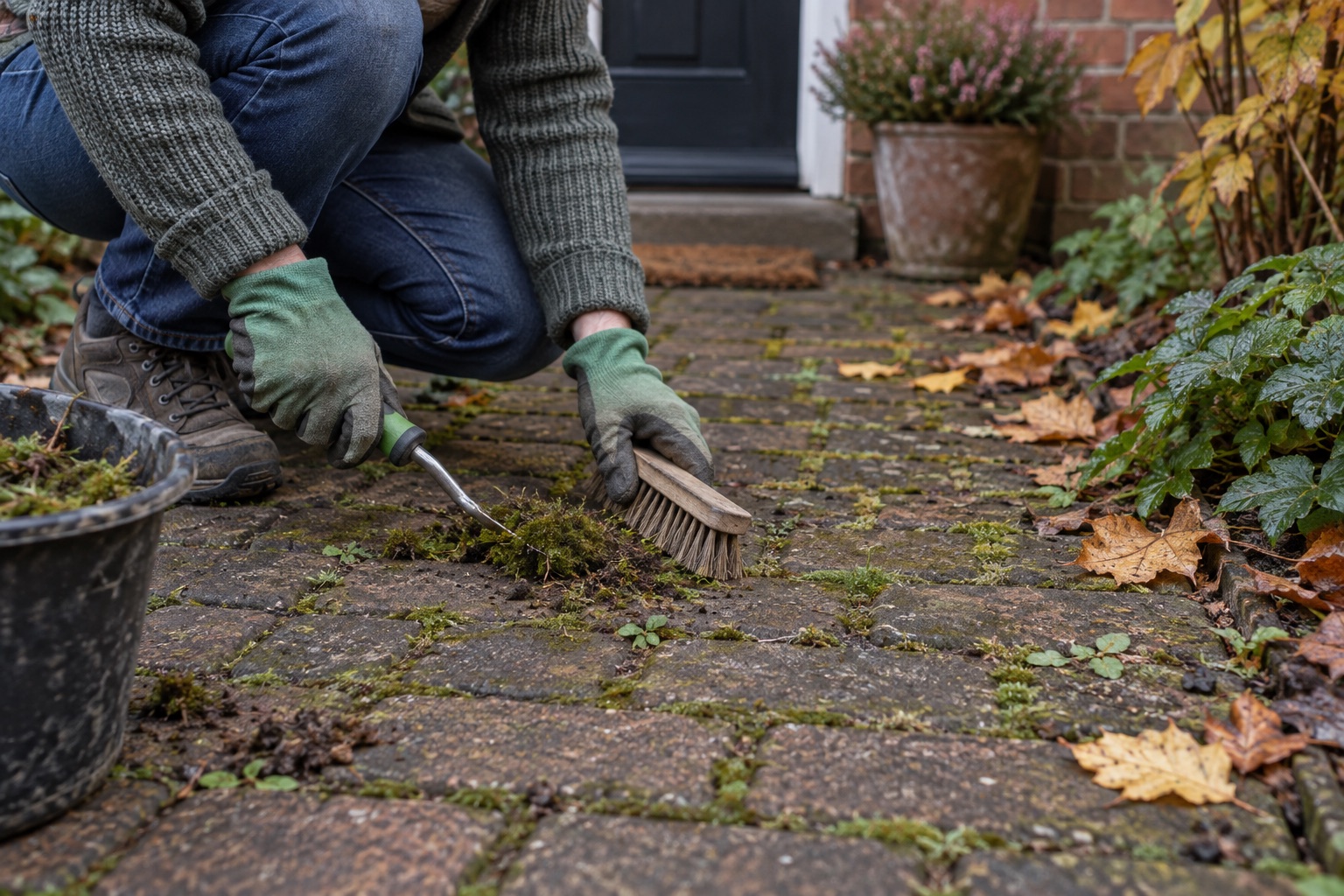
Clear leaves and sweep loose soil first. Work on a dry day so debris can be collected rather than washed into a drain. Wear gloves and eye protection when scraping. A narrow manual tool gives more control than a rotating nozzle around joints and edges.
Lift growth without hollowing the joint
Use the scraper or brush head only as needed to detach moss from the upper joint. Avoid gouging the block face or levering against an already loose block. Sweep the loosened growth into a bag; do not push it into a road gully. If a wide area is heavily colonised, check the paving maker's cleaning instructions before deciding whether any treatment is allowed. Marshalls notes that chemical cleaners are not appropriate for some clay paving, so an unknown block type is a reason to pause rather than pick a generic moss killer.
Wet & Forget Outdoor is one possible leave-on growth treatment only where its current label and the block maker both permit it; it is not a replacement for removing accumulated debris or checking drainage. Keep any treatment away from ponds and watercourses. See pressure washing block paving for the separate mechanical method and its joint risks.
 View product on Amazon
GARDENA combisystem 3-in-1 Patio Cleaner
Best for: Controlled mechanical cleaning of moss in block-paving joints
A narrow joint tool with scraper, brush and blade options. Work lightly so you do not gouge blocks or pull out more jointing sand than necessary.
Check whether a combisystem handle is included with the exact listing; inspect and replace displaced jointing material after cleaning.
- 3-in-1 head
- Joint cleaning
- Manual control
- Handle may be extra
 View product on Amazon
Laeto Kiln Dried Paving Sand 20kg
Best for: Refilling dry joints in conventional flexible block paving
Fine, dry jointing sand to brush into conventional block-paving joints once the whole joint depth has dried after cleaning. Confirm your installation uses this type of jointing material.
Not a substitute for proprietary permeable, resin or rigid jointing systems.
- 20 kg bag
- Kiln dried
- For block joints
- Apply dry
Check sand, stability and shade afterwards
When the paving is fully dry, inspect the joint depth. If sand has been lost, use the paving system's specified kiln-dried or other approved jointing material and brush it in as instructed; do not fill joints with an arbitrary mix. The re-sanding guide explains the follow-up. Loose or sunken blocks may need repair before re-sanding.
Keep fallen leaves and soil from building up, trim overhanging growth where appropriate and address standing water. These measures reduce the conditions moss likes without repeated hard cleaning. If the green film is across the block faces rather than rooted in joints, compare the algae guide.
Frequently asked questions
Will pressure washing remove moss from block paving?
It may, but it can remove jointing sand or damage weak edges. Start with controlled manual removal.
Do I need to re-sand after scraping?
Only if jointing material has been displaced or is below the system's required depth; use the specified material.
Can I use a generic moss killer on clay pavers?
Do not assume so. Check both the product label and clay-block maker's maintenance guidance.
Why does moss return quickly?
Persistent shade, trapped debris, damp joints or poor drainage may remain after the visible moss is removed.
Is a wire brush safe on block faces?
A hard wire brush can scratch or mark some blocks. Keep a joint tool within the gap and test before broader use.