
Low-pressure patio guide
How to clean a patio without a pressure washer
Clean patio slabs with sweeping, warm water, detergent and brushing, with safer options for algae, black spot, fragile joints and natural stone.
Useful products for the job
Manual tools and a label-approved treatment
Start with a brush matched to the paving. An outdoor treatment is an option for organic growth only after confirming surface and runoff suitability.
 View product on Amazon
Newman and Cole Deck Scrubber Brush
Best for: Robust paving and sound timber that tolerate a stiff brush
A long-handled stiff brush for loosening surface dirt without a pressure washer. Test a small patch first; soft stone, delicate pointing and composite boards may need a gentler brush.
Use only where the surface maker permits firm brushing; protect joints and finishes.
- Stiff bristles
- Long handle
- Manual cleaning
- Test first
 View product on Amazon
Wet & Forget Outdoor Cleaner 5L
Best for: Label-approved outdoor surfaces with algae, mould or lichen
A concentrated outdoor treatment for organic growth on many exterior surfaces. It is a treatment, not an instant pressure-washing substitute; follow the label for dilution, weather and runoff.
Check the exact surface and any sealer with the maker before use; keep it out of ponds and follow plant and pet precautions.
- 5 l concentrate
- Outdoor surfaces
- Organic growth
- Label-led dilution
Simple kit
Most routine patio cleaning needs very little equipment
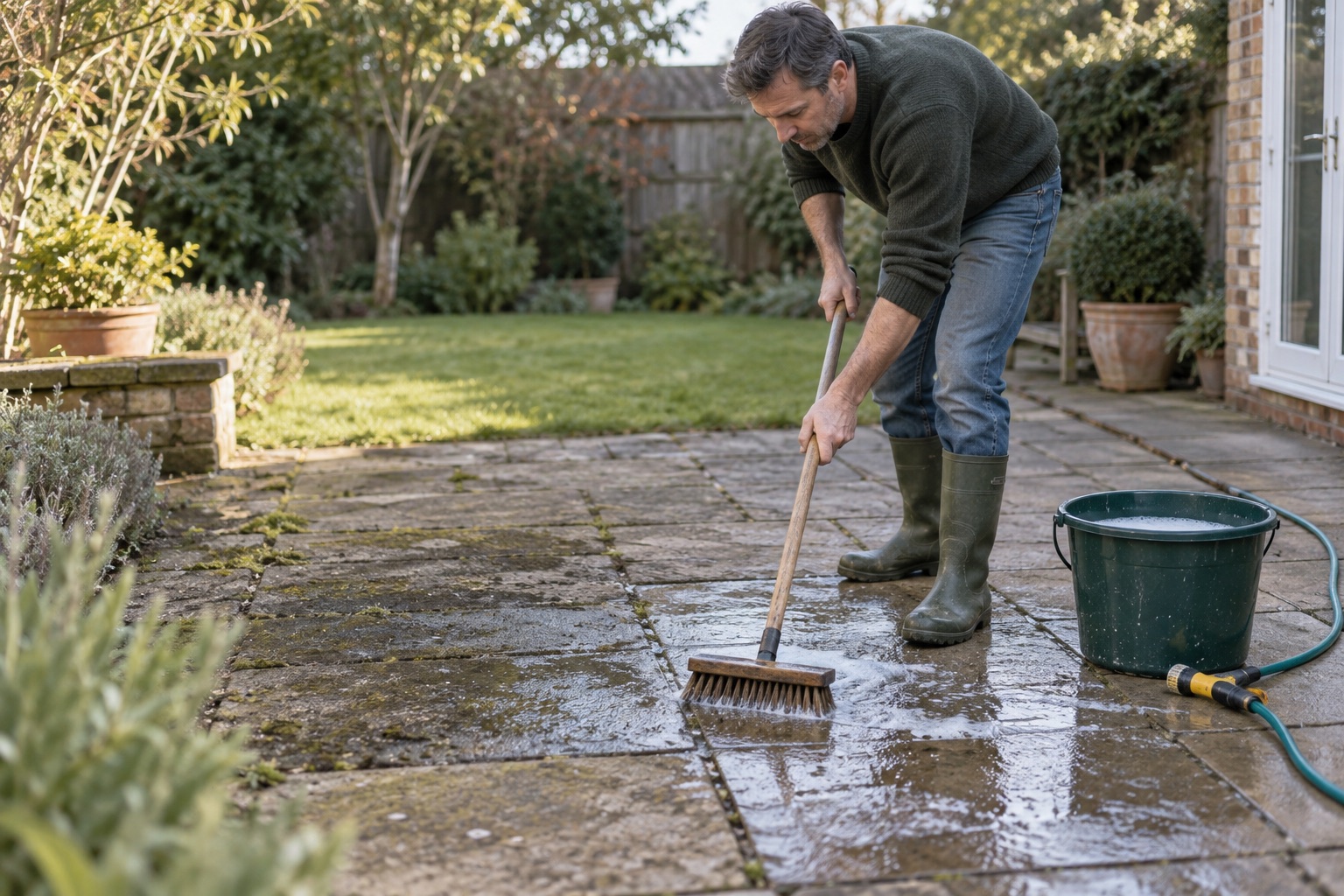
Use a wide broom, bucket, long-handled brush, garden hose with a gentle spray, gloves and eye protection. Choose the brush for the finish: a stiff brush can work on robust textured concrete, while a softer tool is safer on smooth porcelain, delicate natural stone and some sealed surfaces.
Before introducing detergent, identify the slabs and inspect the pointing. Move furniture and pots, lift rather than drag them, and clear dry debris. Protect nearby planting as the product label directs and block access for children and pets until the area is rinsed and safe.
| Problem | First method | Useful tool | Avoid |
|---|---|---|---|
| Loose dirt and leaves | Dry sweep | Outdoor broom | Washing grit into joints |
| General grime | Warm detergent solution | Medium brush | Letting solution dry |
| Green algae | Labelled treatment or repeated brushing | Stiff brush with runoff control | Unlabelled mixtures |
| Black lichen spots | Material-approved specialist treatment | Small test patch | Aggressive scraping |
| Loose pointing | Gentle hand clean | Soft brush and hose rinse | Concentrated pressure |
The brush-and-rinse method
- Sweep the patio in two directions so grit is lifted from textured surfaces and corners.
- Wet a small working section. This prevents the first slab absorbing all the solution.
- Add a mild detergent only if the paving maker permits it, using the labelled dilution.
- Agitate with overlapping strokes. Work across joints rather than digging the brush into them.
- Give the solution only the labelled contact time and do not let it dry.
- Rinse with clean water towards a safe collection or permeable area, keeping contaminated runoff away from drains.
Repeat a gentle pass before reaching for a stronger product. Wet paving can look uniformly clean; let a test section dry before judging the result.
Algae and black spot need diagnosis, not brute force
Green surface growth often returns where shade, poor airflow and standing water remain. Manual brushing can remove the bulk, but a product authorised and labelled for patio algae may provide longer control. Follow the label exactly, including personal protection, access restrictions, plant protection and disposal.
Black spots are commonly established lichen colonies and can be much slower to fade. A compatible specialist treatment may need time or repeat applications. Do not promise an instant result and do not mix bleach, acids or household chemicals. Our guides explain how to remove patio algae and how to tackle black spots.
If manual work stalls
A compact washer is a fallback, not the first step
When the patio is sound and manual cleaning leaves widespread embedded grime, a controllable mains washer can reduce the physical work. Start with a fan setting and test discreetly; it remains a separate decision after trying the hand-cleaning method.
If you decide a machine is appropriate, follow the safe patio pressure-washing method and compare patio pressure washers.
Small maintenance jobs delay the next deep clean
- Sweep leaves and soil before they hold moisture against the paving.
- Move pots occasionally and clean beneath saucers.
- Cut back only enough planting to improve airflow without damaging the garden.
- Investigate persistent puddles rather than repeatedly treating the growth they cause.
- Inspect joints after frost, heavy rain and cleaning.
Use the condition-led schedule in how often should you clean a patio?
Use chemical products only as directed
The Health and Safety Executive explains that the product label sets restrictions for personal protection, access, environmental protection, frequency and disposal. Some patio cleaners are biocidal products; choose one approved for its intended use and consider a non-chemical method first.
Frequently asked questions
What is the best homemade patio cleaner?
Do not improvise mixtures. Warm water and a mild detergent permitted by the paving supplier are enough for routine grime. Use a labelled material-compatible product for biological growth.
Can washing-up liquid clean patio slabs?
A small amount may be suitable for general dirt if the paving guidance allows it, but it must be rinsed thoroughly and kept out of drains. Avoid highly foaming products near runoff routes.
Will scrubbing damage patio pointing?
Aggressive brushing can disturb weak mortar or loose jointing. Inspect first, work across joints and change to a softer brush if material begins to move.
Can I remove patio algae without chemicals?
Often you can remove visible growth with repeated brushing and water. Improving drainage, sunlight and leaf removal helps slow its return, though established growth may need a labelled treatment.
Is manual cleaning better for natural stone?
It usually offers more control and is a sensible first method, but the brush and detergent must still suit the exact stone and finish.