
Electrical-safety guide
Using an extension lead with a pressure washer safely
Check the manual, load, cable length, RCD and dry connection before using an extension lead with a pressure washer outdoors.
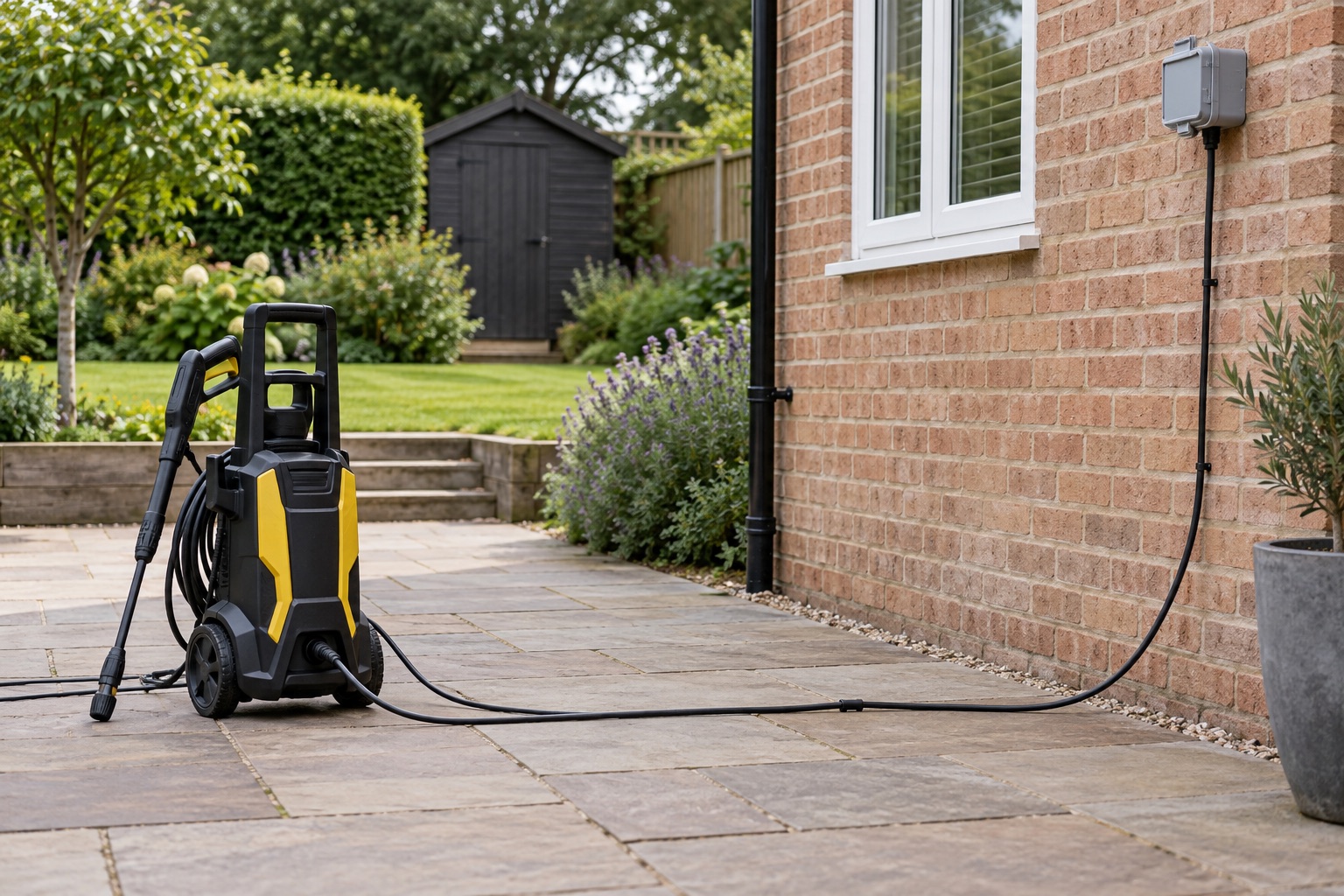
Read the exact washer and lead ratings together
A pressure washer is a substantial electrical load. Check the appliance's rated watts or amps and its manual's instructions on extension leads; some models specify a minimum conductor size or permitted length. Compare those requirements with the extension lead's ampere rating and actual cable specification. Do not assume a lead is adequate because its plug fits. A long or undersized cable can cause voltage drop, a humming motor, poor starting or overheating.
Electrical Safety First recommends RCD protection for outdoor equipment and an extension lead suitable for outdoor use. Confirm the circuit or plug-in protection is working as instructed, and do not bypass a tripping RCD. Inspect the whole lead, plug and washer cable for crushed insulation, exposed conductors, hot spots or damaged pins. Replace damaged equipment; taped repairs are not a safe outdoor solution.
Keep every electrical connection out of the wet zone
- Choose a suitable outdoor socket or approved protected supply with RCD protection.
- Use only a lead and connection arrangement rated for the washer and outdoor environment.
- Keep joints off the ground, closed and away from runoff, puddles and the lance's spray path.
- Unwind a cable reel completely so heat can escape, even if the working distance is short.
- Route cables where they cannot be driven over, trapped in a door or tripped over.
An IP54 box resists ordinary dust and splashing when properly closed; it is not a licence to pressure-jet the box, leave a connector submerged or ignore the washer manual. Keep the washer body and all plugs dry. If you cannot safely separate water and electricity, stop the job.
Stop immediately when the supply behaves abnormally
Disconnect power before investigating a repeated trip, warm plug, burning smell, damaged cable or a washer that repeatedly cuts out. Do not keep resetting a breaker to finish a patio. A one-off trip can still indicate a fault: if the problem recurs after safe, external checks, seek a qualified electrician or the washer maker's service route. Never open a mains appliance housing to diagnose it yourself.
If the difficulty is simply reach, a longer garden hose or a manufacturer-approved high-pressure extension hose may allow the machine to stay near a safe socket. These water-side options have their own compatibility and pressure ratings, but avoid creating an extra mains junction in the garden.
One protected connection example
Masterplug's WBXBFG10B-MP combines a 10 m, 13 A extension lead with an IP54 closed enclosure. Treat it as one component in a correctly rated, RCD-protected setup, not as a universal recommendation for every washer. Check the current manual, keep the enclosure closed and off the ground, and never direct the jet at it.
 View product on Amazon
Masterplug IP54 Weatherproof Box with 10 m Extension Lead
Best for: A correctly rated, RCD-protected outdoor electrical connection kept away from a pressure-washer spray zone
A wall-mountable IP54 enclosure containing a four-socket 10 m, 13 A extension lead. It protects the closed connection from ordinary outdoor weather, but never makes a plug safe to jet or immerse.
Confirm the washer manual permits an extension, check its load and cable requirements, fully unwind any reel, keep the box closed and off the ground, and use RCD protection.
- IP54 closed box
- 10 m lead
- 13 A rating
- Four sockets
Frequently asked questions
Can I use any 13 A extension lead with a pressure washer?
No. The washer's wattage, manual, cable length and conductor specification still matter, as does outdoor suitability and RCD protection.
Should a cable reel be fully unwound?
Yes. A partly wound reel can retain heat under load; follow the reel's own instructions and rating.
Is an IP54 box safe to spray with the washer?
No. Keep it closed, correctly installed and away from the spray and standing water. IP54 does not mean jet-proof or submersible.
What if the RCD trips repeatedly?
Stop using the equipment, disconnect it safely and seek a qualified assessment. Do not bypass or repeatedly reset the protection.
Could an extension lead make a washer pulse?
Voltage drop can contribute to motor problems, while pulsing more often points to supply or nozzle issues. Follow the pulsing checks without opening the machine.