
Manual decking guide
How to clean decking without a pressure washer
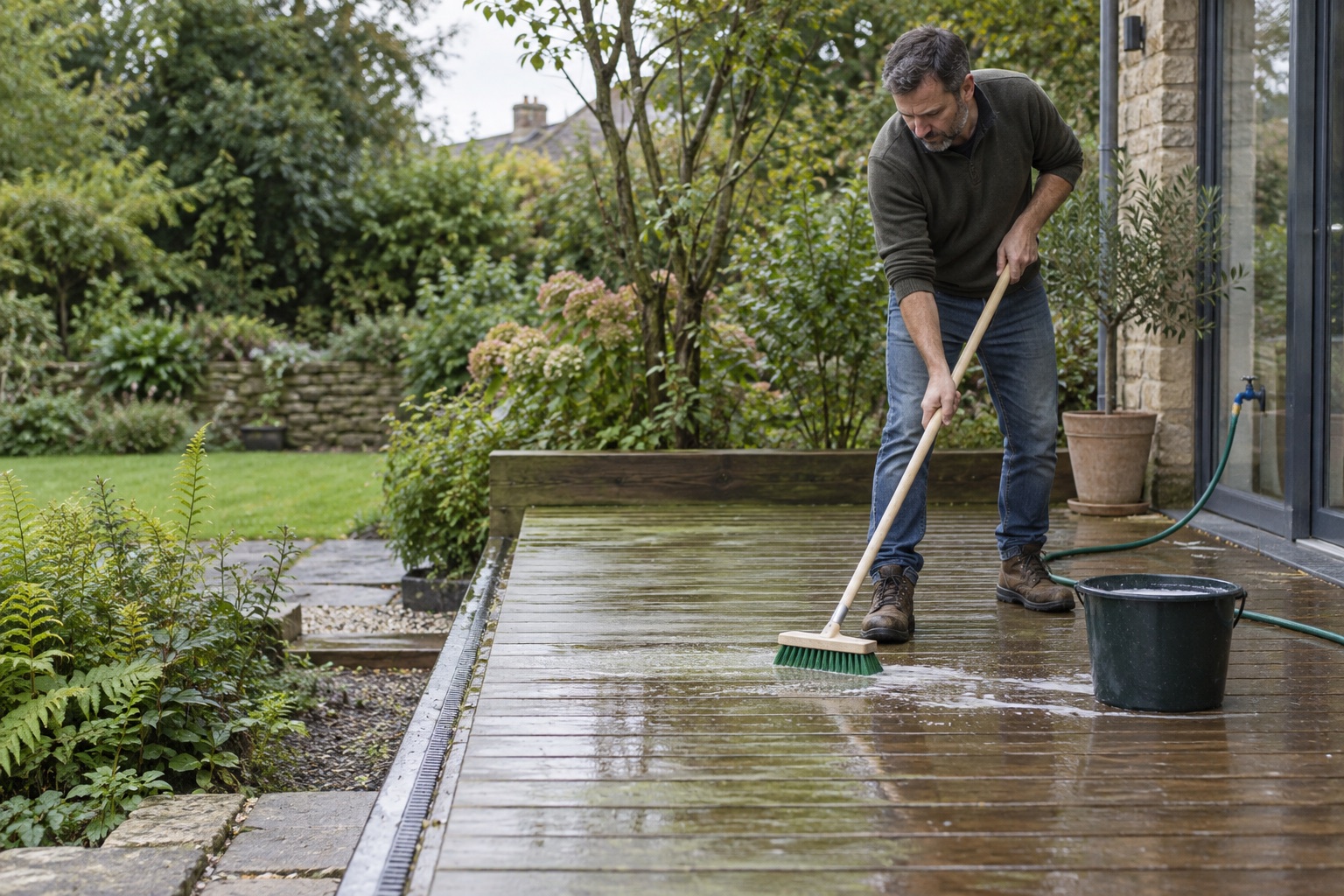
Clean timber or composite decking by hand with sweeping, a compatible cleaner, controlled brushing and a thorough low-force rinse.
Useful products for the job
Clean by hand, board by board
The cleaner is for timber only. On composite, follow the board maker's detergent guidance and use a suitable soft-facing brush.
 View product on Amazon
Ronseal Decking Cleaner 5L
Best for: Cleaning and reviving timber boards before a compatible finish
A deck-specific cleaner for weathered hardwood and softwood. Scrub according to the label, rinse thoroughly and allow the boards to dry fully before oiling.
Use on timber decking after a patch test; check old coatings and the chosen finish instructions.
- 5 l
- Timber decking
- Scrub then rinse
- Patch test
 View product on Amazon
Unger Wood & Composite Deck Brush with Pole
Best for: Manual cleaning of wood and composite deck boards with a supplied telescopic pole
This bundle pairs the dual-bristle, swivelling deck brush with an adjustable telescopic pole. Gentler centre bristles clean board faces while firmer seam bristles reach gaps. Follow the board maker's cleaning guidance.
Check the composite manufacturer's approved brush guidance and test on an inconspicuous board.
- Dual-bristle head
- Swivelling brush
- Wood and composite
- Telescopic pole included
Simple equipment
Choose the brush after the deck material
You need a broom, bucket, measured cleaner, suitable brush, garden hose or watering can, eye protection and footwear with good wet grip. A medium non-metal brush often suits sound timber; capped composite generally needs softer bristles. Test the brush as well as the cleaner because even water-only scrubbing can polish or scratch a finish.
Move furniture rather than working around it. Cover or remove items below a raised deck and protect walls, metalwork and plants as the cleaner label directs. Keep children and pets away until the surface is rinsed and safe.
| Tool | Best use | Choose carefully | Avoid |
|---|---|---|---|
| Soft broom | Loose leaves and grit | Bristle stiffness for composite | Grinding dirt into boards |
| Medium deck brush | Timber grime and grooves | Test on soft weathered wood | Wire bristles |
| Soft-bristle brush | Capped composite | Reach into embossed texture | Abrasive pads |
| Garden hose | Thorough final rinse | Control where water goes | Flooding wall junctions |
| Plastic scraper | Softened debris where permitted | Rounded edge and test patch | Metal blades |
How to clean a deck by hand
- Sweep while dry. Clear gaps and lift grit that would otherwise become abrasive mud.
- Inspect and repair. Secure loose boards and proud fixings, and stop if rot or structural movement is present.
- Mix exactly. Dilute the chosen cleaner to its label and prepare only enough for a manageable area.
- Wet or apply as directed. Follow the product order; some systems call for a damp surface and others do not.
- Brush methodically. Work with the timber grain or composite pattern without letting the cleaner dry.
- Rinse until clear. Remove all residue, then let the whole deck dry before judging it or applying a finish.
Change the method for timber and composite
On timber, avoid overscrubbing soft grain and use a product compatible with the existing oil, stain or paint. Raised fibres should be assessed after drying. Our timber decking guide covers stains and finishing.
On composite, use the board maker’s detergent and bristle guidance. Do not sand, use a wire brush or assume every generation accepts the same treatment. See the dedicated composite cleaning guide.
Optional portable rinse
Low-output cleaners can move rinse water without mains pressure
If access is difficult, a low-output portable cleaner can move rinse water without a mains supply, but it is not required for this method. The deck maker still needs to allow the brush or spray pattern used.
For the direct equipment decision, read can you pressure wash decking?
Remove slippery growth and the conditions behind it
Physical brushing can remove surface film, but established algae may need an authorised treatment labelled for the deck material. Follow dilution, dwell time and runoff controls precisely, and never combine it with another cleaner.
Long-term control comes from clearing leaf traps, keeping gaps open, improving airflow and dealing with overflow or standing water. A deck that stays shaded and damp will regrow algae regardless of how aggressively it is cleaned.
Reliable care references
The TDCA recommends sweeping, mild soap and brushing as a practical timber method. For composites, the installed board maker’s instructions should define detergents, brushes and permitted treatments.
Frequently asked questions
Can I clean decking with just soap and water?
Often for routine grime, provided the soap is accepted by the timber finish or composite maker. Rinse thoroughly so residue does not create a film.
What kind of brush should I use?
Use a non-metal brush tested on the deck. Medium bristles can suit sound timber; capped composite often requires a soft-bristle brush.
How do I clean between decking boards?
Remove loose debris with a narrow non-damaging tool or brush without forcing material underneath. Avoid sharp metal tools and take care around membranes and cables.
Can I use vinegar or homemade cleaner?
Do not improvise. Use a product compatible with the board and finish, with clear instructions for dilution, surfaces and runoff.
How can I make manual cleaning easier?
Work in small sections, use a long-handled brush with suitable stiffness, keep the cleaner within its dwell time and rinse each section before moving on.