
E-bike care
How to clean an e-bike safely
Clean an electric bicycle without a high-pressure washer. Protect the battery, display, motor, connectors and brakes using the maker’s low-water method.
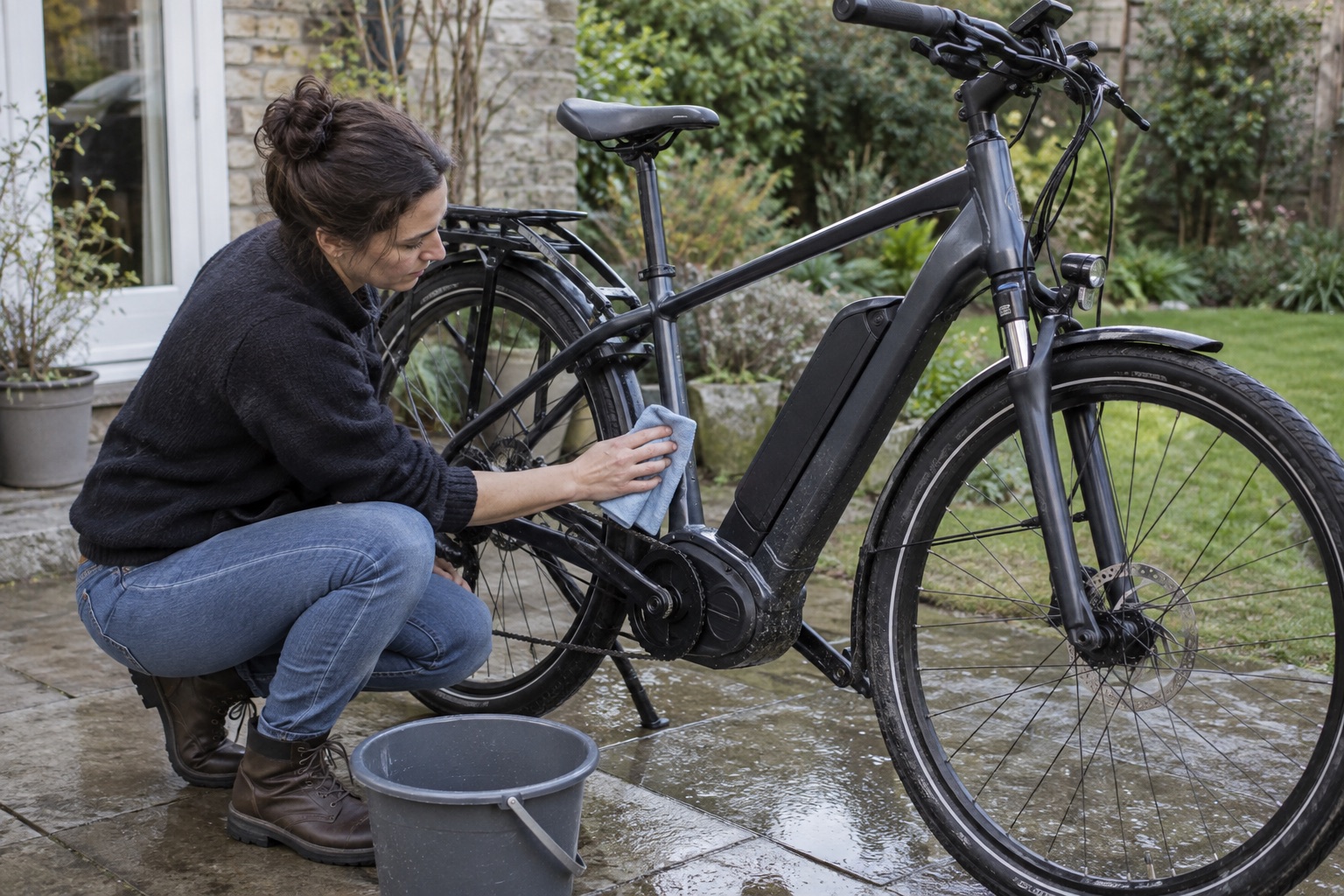
Follow the electrical system’s rules as well as the bike’s
Bosch eBike’s care guidance says not to use a steam jet or high-pressure cleaner because water can penetrate sensitive drive components. It recommends removing removable electronics before washing, using a sponge or brush, and checking brakes and function afterwards. Your particular bike may have an integrated battery, fixed display or different sealing, so use its own manual rather than assuming every part can be removed.
Weather resistance is not permission to point a jet at connectors. Charging ports, battery contacts, motor housings, controls, lights and cable entries deserve the least water.
Prepare a cool, switched-off e-bike
Turn the system off and disconnect the charger. Let the motor and brakes cool. Remove battery and display only if the maker directs and the parts are designed to be removed by the user. Keep contacts dry and never insert cloth fibres or improvised covers into terminals. Check for damaged seals or exposed wiring; if found, arrange service before washing.
Set out separate cloths for frame, wheels and drivetrain so grit and grease do not cross-contaminate. Use a small bucket and a soft brush; no powered sprayer is required.
Clean the frame with minimal liquid
- Brush off loose dry dirt, starting away from electrical openings.
- Wipe the frame with a damp cloth or soft sponge. If the bike maker allows a cleaner, apply it to the cloth or permitted surface rather than flooding controls.
- Use a dedicated brush for wheels and a separate drivetrain cleaner only where component guidance permits.
- Remove cleaner with a barely damp cloth or gentle rinse only where the bike manual allows one.
- Keep water and lubricant off battery contacts, charging ports and brake friction surfaces.
Do not spray the drive unit to dislodge mud. Stubborn grime near the motor or connectors is a reason to slow down or ask a service centre, not increase water pressure.
Hand-cleaning supplies and conditional bike cleaner
Microfibre cloths provide controlled moisture for accessible frame areas and dry-down. Muc-Off Nano Tech Bike Cleaner is for bike parts the frame and electrical-system makers allow to be cleaned and rinsed; keep it off exposed electronics and follow the label. No pressure washer is recommended on this page.
 View product on Amazon
Amazon Basics Microfibre Cleaning Cloths, 24-pack
Best for: Separate soft cloths for low-water cleaning and drying of accessible surfaces
A multipack of reusable microfibre cloths for controlled hand cleaning. Keep clean cloths separate by task, and never drag grit across paint or electrical contacts.
Useful for careful wiping, not a substitute for a paint-safe wash mitt on gritty car bodywork.
- 24 cloths
- 40.5 × 30.5 cm
- Reusable
- Keep grit separate
 View product on Amazon
Muc-Off Nano Tech Bike Cleaner 1L
Best for: Washing muddy bicycle frames with a gentle brush and controlled rinse
A bicycle-specific cleaner for frame and component grime. Follow the label's dwell and rinse instructions without letting it dry; keep spray and rinse away from e-bike electrical openings.
Use only where the bicycle and component makers permit the cleaner; it does not make a high-pressure rinse safe.
- 1 l bottle
- Bike cleaner
- Carbon-compatible claim
- Rinse as labelled
Dry, reassemble and test before riding
Dry surfaces and let contact areas reach the condition specified by the maker before refitting a battery, turning the system on or charging. Refit only removable parts as instructed. Check display response, assistance, lights and brakes in a safe place. Dry and lubricate the chain as specified, keeping lubricant off brake rotors. If a connector is wet or the system reports an error, do not charge or ride until the maker or dealer has advised you.
For an ordinary non-electric bicycle, use our bicycle cleaning guide. For portable washer comparisons, see power cleaner versus pressure washer, but follow this page’s e-bike restrictions.
Frequently asked questions
Can I pressure wash an e-bike?
Do not use a high-pressure cleaner. Bosch eBike expressly advises against it, and water may penetrate drive and electrical components.
Should I remove the battery before cleaning?
Only as the bike and battery maker instructs. Many removable systems call for it; integrated batteries need their own care method.
Can I rinse the motor with a hose?
Avoid directing water into the motor or cable entries. Use the exact system’s cleaning guidance and a damp cloth where appropriate.
When can I charge after cleaning?
Only when the bike and charging contacts are fully dry and the manufacturer’s instructions allow it. Never charge a visibly wet or damaged connector.
Is ordinary bike cleaner safe on an e-bike?
Only on surfaces the cleaner and bike makers approve. Keep spray and rinse away from electrical contacts, controls and openings.