
Loose-surface path guide
How to clean a gravel path without displacing it
Remove leaves, weeds and surface dirt from a gravel path using light raking, hand work and careful drainage rather than a pressure jet.
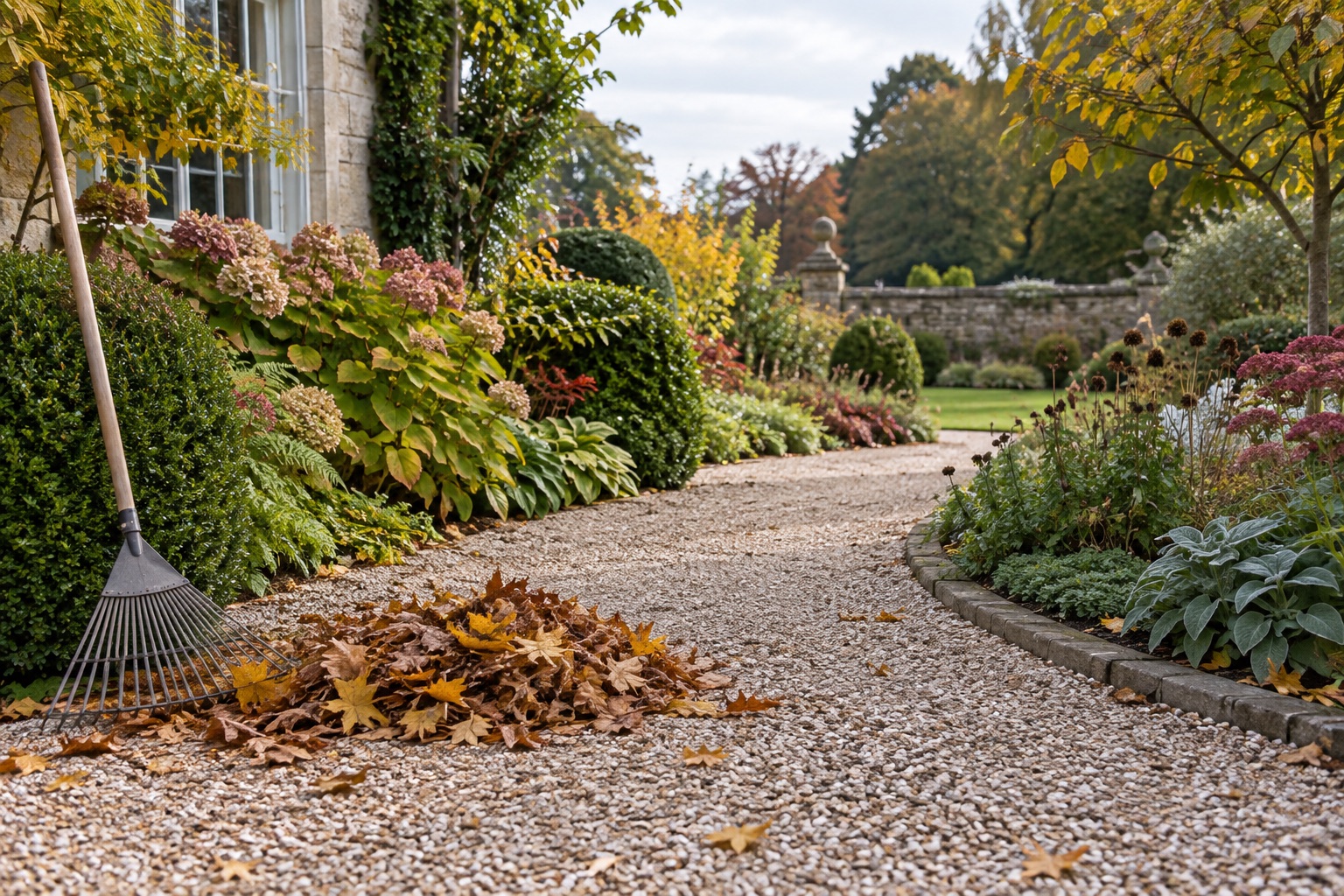
Marshalls' gravel-path installation guide finishes by raking the aggregate level. For routine cleaning, skim leaves and twigs without digging into that levelled layer. See Marshalls' gravel-path method.
Separate surface debris from a path problem
Dry leaves, seed heads and twigs are a routine cleaning job. Mud rising through gravel, persistent weeds or stones spreading across a lawn point to a deeper issue: insufficient depth, failed membrane, poor edging or water that cannot drain. Note the aggregate size and whether the path is on a slope; very fine pea gravel moves much more easily than angular stone.
Do not use a concentrated jet as if the path were concrete paving. It can send stones into windows or flower beds, remove the decorative top layer and expose the underlying membrane. It can also wash sediment towards a surface-water drain. A leaf rake and hand work give more control.
Clean a gravel path in manageable sections
- Pick up litter and larger branches by hand, using gloves. Keep children and pets away from sharp or contaminated objects.
- Skim dry leaves with a lightweight plastic-tine rake. Hold the tines above the base rather than digging deeply; shake any caught stones back onto the path.
- Pull individual weeds with roots where practical. Disturb as little aggregate and membrane as possible.
- For a small dirty patch, lift affected gravel into a suitable container, separate debris, rinse only if the material and location allow it, and let it drain before replacement. Do not flush muddy water into a road gully.
- Rake stones back to an even depth and check that edging still retains them.
If a large area is stained by oil or other chemicals, identify the substance and disposal route first. Do not spread contamination through the path with a hose; our runoff guide explains why drains matter.
A gentle rake for leaves
The Spear & Jackson plastic leaf rake below has broad, flexible tines suited to gathering light debris. It will still pull stones if pressed into the aggregate. For a narrow path or against edging, switch to a small hand rake or simply lift leaves by hand rather than forcing a wide head through plants.
 View product on Amazon
Spear & Jackson Neverbend Plastic Leaf Rake
Best for: Gathering leaves from a level gravel path without blasting out aggregate
A wide plastic-tine rake for light leaves and garden debris. Skim the gravel surface; digging into it will pull aggregate into the waste pile.
Best for open, stable paths; use a smaller hand tool at edging and check that stones have not migrated into planting or drains.
- 24 plastic tines
- 24 in head
- Tubular shaft
- Light surface pass
What to do if stones keep escaping
Replace lost aggregate with the same size and type after the path has settled. Repair loose edging and check the slope and drainage; repeated low spots may need a proper base rebuild. A weed membrane reduces mixing with soil but does not replace maintenance and can fail at seams. Where the path meets outdoor steps, clear stray stones from each tread because loose aggregate is a slip hazard.
Frequently asked questions
Can you pressure wash a gravel path?
It is usually the wrong method. A pressure jet scatters stones and silt and can expose the path base.
How do I remove leaves without losing gravel?
Rake lightly across the surface with plastic tines, then shake out caught stones before bagging the leaves.
Should I hose dirty gravel?
Only in a small, controlled area where drainage and runoff are understood. Lift and rinse a small batch separately if the material permits it.
Why do weeds grow through gravel?
Seeds often germinate in organic debris on top even when a membrane is present. Remove litter and young weeds before roots establish.
How do I stop gravel moving onto the lawn?
Restore the edge restraint, replace missing stones and check whether the path slope or aggregate size is causing movement.