
Wooden fence cleaning
How to clean a wooden fence without damaging it
Wash a wooden garden fence without splintering boards or stripping sound stain. Inspect posts, use a soft brush and prepare correctly before repainting.
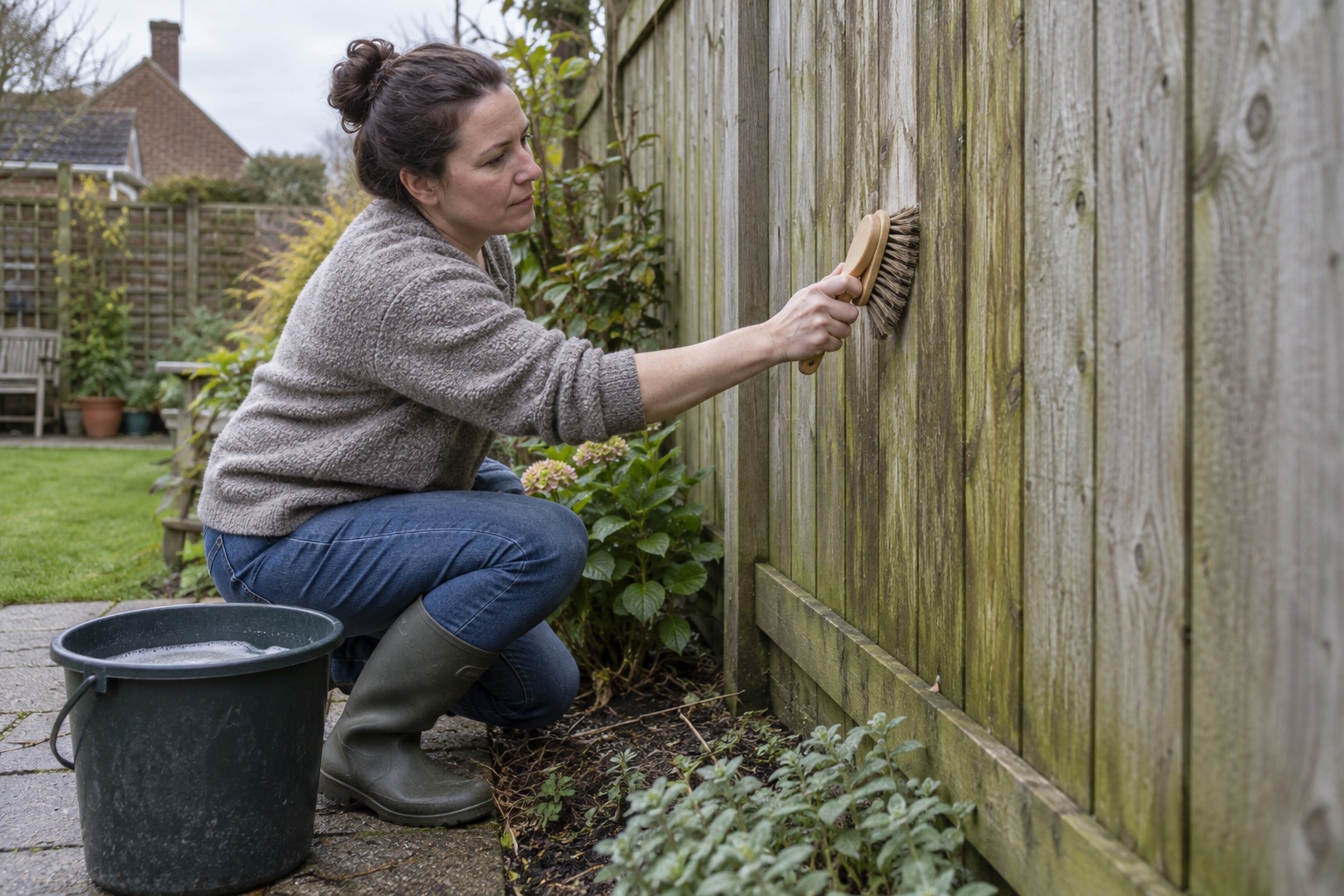
Inspect posts, panels and the old coating
Before making a fence wet, look for leaning posts, rot at ground level, split boards and loose nails. A stained or painted face may be sound in one place and flaking in another. Cleaning cannot restore weak timber; secure or replace damaged sections first. Move pots and protect plants so washing water does not pool in beds.
Identify the likely cause of a dark patch. Loose dust, algae in shade and a failed coating need different responses. A test patch helps show whether the old colour will wash off. If the fence is part of a boundary with uncertain access, plan work from your side without spraying a neighbour's property.
A low-force method for fence boards
- Brush away cobwebs, leaves and loose growth while the fence is dry.
- Use a soft brush with water or a timber-compatible cleaner approved by the coating maker.
- Work from the top down, following the grain rather than grinding across it.
- Pay attention to panel tops and rail junctions without forcing water into end grain.
- Rinse lightly if the cleaner requires it and keep runoff away from ponds and drains.
- Let the boards dry, then inspect for lifted fibres or remaining coating defects.
A soft water-fed brush gives controlled contact on sound panels. Keep its flow low and remember that included cleaning tablets are not automatically suitable for a fence coating. A pressure washer with a narrow jet can shred softwood and cut through stain; manual cleaning is the starting point. Our timber decking guide explains similar grain risks on horizontal boards.
Handle algae and repainting as separate jobs
Remove the conditions encouraging green growth where possible: overhanging leaves, wet soil against panels and poor airflow. If a treatment is needed, choose one that explicitly covers your timber and finish, and follow plant and runoff precautions. Do not mix it with another cleaner.
If you plan to stain or paint, use the finish maker's preparation guidance rather than coating over grime. Ronseal's fence-protector instructions require clean, dry timber before application. Loose old finish may need removal and damaged boards may need repair. Do not trap moisture under new paint. For a similarly exposed structure with windows, read how to clean a shed exterior.
A soft brush for sound, reachable panels
The GARDENA set provides a soft water-fed brush. Use only the brush and water unless any supplied cleaning product is confirmed suitable for the fence finish. It does not replace structural repairs or a timber-specific stain preparation system.
 View product on Amazon
GARDENA Cleansystem Soft Wash Set
Best for: Ground-level cleaning of sound, delicate exterior finishes after a patch test
A 90 cm water-fed handle and soft brush for controlled cleaning of larger sensitive surfaces. Use light contact and check the wall finish maker's guidance; the included cleaning tabs are not automatically suitable for render or paint.
A gentle tool, not a guarantee that a fragile coating or loose render can be scrubbed safely.
- 90 cm handle
- Soft brush
- Adjustable water flow
- Hose connection
Frequently asked questions
Can I pressure wash a wooden fence?
Manual cleaning is safer. A jet can raise fibres, remove coatings and force water into panel joints.
How do I remove green algae from a fence?
Brush loose growth, wash gently and address damp shade. Use only a treatment approved for that timber and coating if necessary.
Can I paint the fence immediately after washing?
No. Let it dry fully and follow the paint or stain maker's surface-preparation directions.
Will a cleaner fix rotten fence posts?
No. Soft or unstable posts need repair or replacement before cosmetic cleaning.
What brush should I use?
Start with a soft non-metal brush and test it on an inconspicuous board to avoid raising grain.