
Fault-finding guide
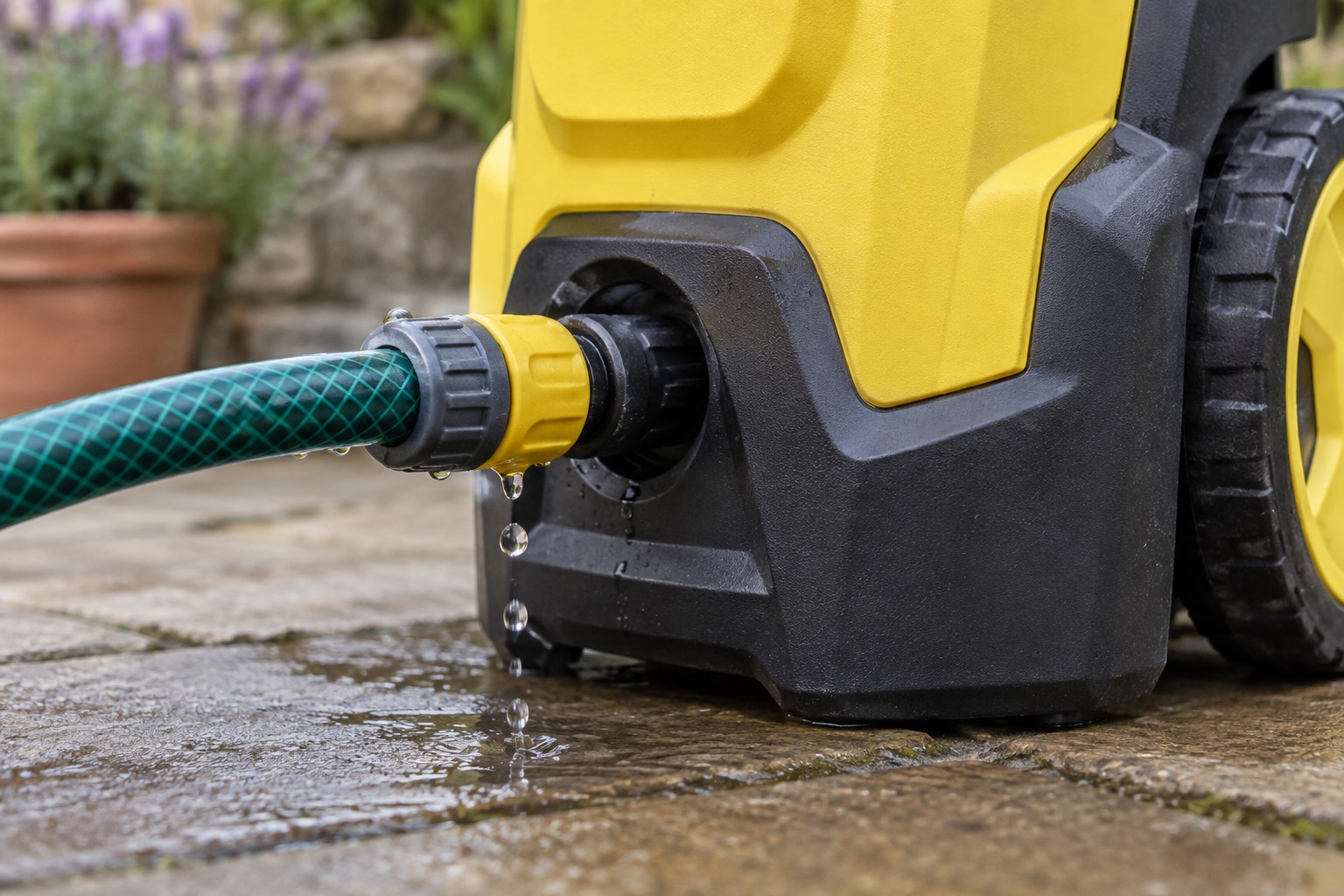
Pressure washer leaking water
Distinguish an inlet drip from a high-pressure hose or internal leak, check accessible seals safely and know when to stop using the washer.
Work through safe external checks
Use the symptoms already observed. These checks keep electrical faults, suspected high-pressure leaks and uncertain isolation procedures outside the ordinary fault-finding route.
One external check at a time
Guided inlet-leak checks
Start with warning signs, then follow the external checks for this symptom. Your answers stay in this browser; this tool cannot diagnose an internal fault or approve a restart.
Your next step
Your answer will determine whether to pause, continue external checks or seek service.
Read the symptom guides →Follow Electrical Safety First's pressure-washer safety guidance and your exact manual. The HSE injection-injury alert explains why a pressurised-fluid injury needs immediate medical treatment.
First locate the source from a safe distance
Water at the garden-hose inlet, high-pressure outlet, gun, hose or underside of the pump does not mean the same thing. Do not follow a fine spray with your fingers: a high-pressure jet can inject water through the skin and cause serious injury even when the visible wound is tiny. Follow the exact manual's shutdown, power-isolation and trapped-pressure release sequence before a closer visual inspection; do not assume a universal order.
If water has reached a plug, socket or electrical area, do not handle a wet connection. Isolate the circuit safely and seek a qualified assessment. A washer that seems to cycle by itself between trigger pulls may also have pressure loss; read the pulsing and surging guide.
What to check at an accessible inlet fitting
With everything depressurised and disconnected, inspect the garden-hose coupling and its rubber washer. A missing, flattened or twisted seal can create a low-pressure-side drip. Refit the correct connector squarely by hand as the manual directs; do not cross-thread or overtighten plastic. Look for cracks in an optional transparent filter bowl or adapter. Replace only with the exact maker-approved part, not a similarly shaped high-pressure fitting.
The Kärcher K-series inlet filter below is an example of an optional compatible assembly; it is not a general leak repair. Its seals and bowl still need to be in good condition. If the leak is at the machine body rather than the removable inlet connection, stop rather than adding sealant.
 View product on Amazon
Kärcher K-Series Water Filter
Best for: Filtering small particles from an approved water supply before a Kärcher K-series pump
A transparent inlet-side filter for the K 2–K 7 domestic range. It catches particles, but does not make dirty, chemically contaminated or unsuitable water safe for the washer.
An optional extra where the machine instructions and water source justify it; first inspect and clean any filter already built into the washer.
- Inlet side
- Part 4.730-059.0
- K 2–K 7
- Check existing filter
High-pressure or internal leaks are not DIY checks
A damaged or bulging high-pressure hose, leaking gun, failed outlet seal, water from a pump housing or oil under the machine needs the manufacturer's service route. Do not try a hose clamp, tape, adhesive or a non-rated replacement. Even with power off, a hose can hold pressure until the shutdown sequence is complete. Ask for the correct model-specific repair or replacement assembly.
Some makers describe a very small amount of pump water as technically normal, but that is model-specific and not grounds to ignore a growing pool, recurrent cycling or water near electrics. If you cannot identify a harmless condensation or drainage point from the manual, treat an unexplained leak as a reason to stop.
Retest only after a verified low-pressure-side correction
After reseating a manufacturer-approved user-removable inlet seal, follow only the manual's permitted low-pressure inlet check with motor power isolated. An ordinary supply-pressure observation is not a check of the high-pressure circuit and does not approve a powered restart. Keep all electrical parts dry. If dripping continues, do not work around it by reducing pressure or moving the machine into runoff; arrange service. Use the filter maintenance guide to keep removable inlet parts free of grit that can prevent a sound fit.
Frequently asked questions
Is a drip at the garden-hose connector serious?
It may be a loose low-pressure fitting or worn washer, but switch off and depressurise before checking. Persistent leakage needs the correct replacement part.
Can I use PTFE tape on a leaking pressure hose?
Do not improvise a high-pressure repair. Use the maker's specified assembly or authorised service.
Why does the washer leak only when running?
Higher pressure can reveal a hose, gun or internal seal fault. Stop and identify it from a safe distance rather than touching the spray.
Can I ignore water under the machine?
No, not without confirming a harmless model-specific source. Water near electrics, a growing pool or oil calls for service.
What if a jet hits my skin?
Seek urgent medical attention for a suspected injection injury, even if the mark appears small.